Born in Duplicate
Some people are born with the effortless advantages—good hair, a cute nose, clear skin. Others arrive with talent: a jump shot, an ear for music, a mind that understands numbers before language. And then there are the rare few handed a companion on day one.
Only about 0.3% of people enter the world with an identical twin. I’m part of that sliver—a statistic so rare it feels almost mythic.
Being a twin isn’t something you earn or learn. You just are it. A matched set. Before I was Ashley, I was Amanda’s twin. Technically, I still am. But that phrasing makes it sound passive—a mirror, a copy, an afterthought. It leaves no room for the fact that I liked books more than banter, grades more than game days, even if I played basketball mostly because she did. That’s what happens when you’re born next to someone who excels naturally: you follow, or you fade.
We grew up like most kids, only in duplicate. Same grade, same school, same room. Same friends, same sports. And yet, even small things mattered: someone to hold the backpack on the first day of school, long drives to away games, a hand to scratch a back. Those everyday constants made life easier than I realized.
Identical twins are supposed to simplify the nature-versus-nurture debate. Same DNA, same home, same upbringing. But instead we complicate the rules. We share everything genetically, yet we grew into very different people.
She was louder, taller by half an inch, more self-assured. I measured myself against her in free throws, in grades, in quiet ambition. People often asked us to define ourselves: who’s smarter, prettier, more outgoing. Questions never posed to regular sisters.
Eventually, we stopped dressing alike. I went for neutrals, clean lines, an outfit that could read as effort or indifference. Amanda wore bear boots, ripped denim, and made it look effortless. Her clothes could swallow me; mine would bore her. Her apartment looked like a streetwear catalog; mine was pared down, lined with books and plants. She played loud music; I preferred quiet tracks. We drifted into separate worlds, though thankfully never liked the same men.
College brought the first real separation. I left for school, learning to enter a room, introduce myself, and simply be Ashley. People didn’t call me a twin. They didn’t know another version of me existed. Amanda followed a few months later—not because she had to, but because proximity had always been easier. Our only true separation came with an internship eight months away, and even that felt like a season changing.
I learned to be alone, but the twin bond never truly loosened. Visits were marked by small conflicts—dishes, shoes, something trivial—but we missed each other the way one misses a limb they didn’t know mattered. Now, as adults, closeness is no longer automatic. We choose it.
Here’s what I’ve realized: being a twin isn’t having a built-in best friend. It’s growing alongside someone who has known every version of you—the awkward, the brave, the in-between. Someone who remembers the childhood you’re always trying to reinterpret with tenderness. We’ve grown into different people, but when I see Amanda—even from the corner of my eye—there’s still that familiar ease. Some connections are forged at birth, and some never let go.

Photography by Isa Darisday
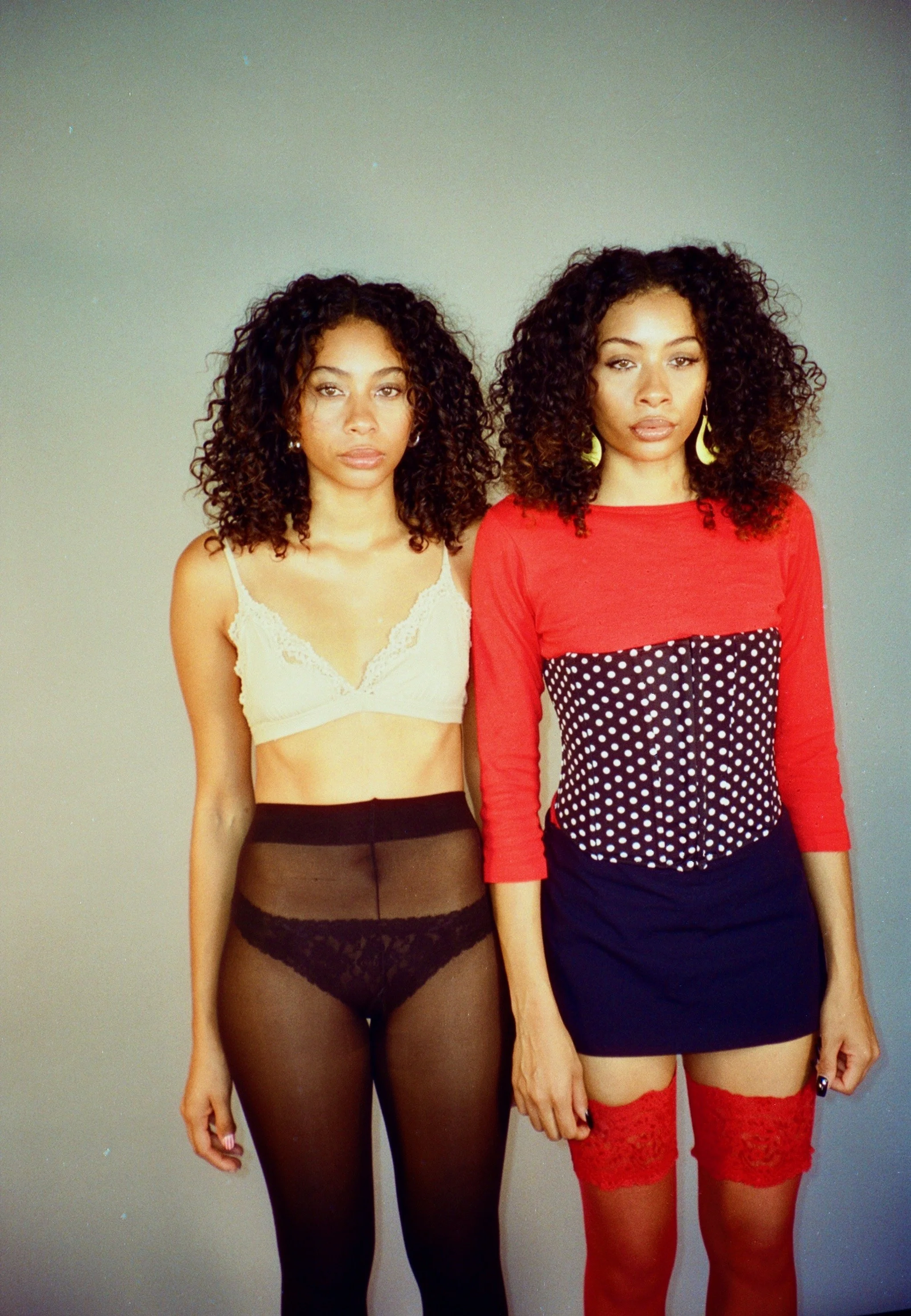
Photography by Isa Darisday